CHA Library
Since 2022 we’ve been building our library with articles, white-papers, educational documents, and opinion-pieces to preserve information and knowledge.
IT CAN’T HAPPEN HERE: Freedom Is Rarely Taken All At Once
Jul 11, 2026 - Shirley Guertin
Full Article
IT CAN’T HAPPEN HERE: Freedom Is Rarely Taken All At Once
Lessons from ‘The Winds of War’, ‘War and Remembrance’, and Today’s Canada
I recently finished reading Herman Wouk’s The Winds of War and War and Remembrance.
The books are considered historical fiction, but they are much more than that. They are a master class in how free societies slowly surrender their freedoms without realizing it.
What struck me most was not HitIer. It was the ordinary Germans: The shopkeepers. The teachers. The civil servants. The churchgoers. The neighbours. The people who simply wanted to live their lives in peace.
Most were not extremists. Most were not political activists. Most were not seeking dictatorship. They simply failed to recognize what was happening while it was happening. And that is the lesson that has stayed with me.
The Danger Was Never Obvious
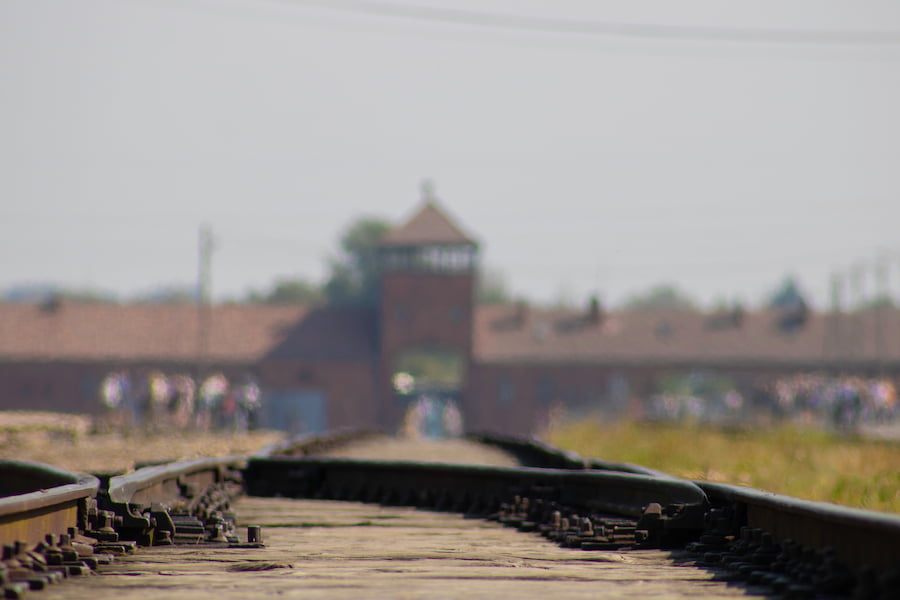
Looking back today, we know how the story ends. We know about the concentration camps. We know about the war. We know about the millions who died.
But the Germans living through the early years did not know any of that.
They were not asked to vote for tyranny. They were asked to support measures for public order. National security. Economic stability. Protection from dangerous ideas. Protection from dangerous people.
Each step appeared reasonable. Each step had a justification. Each step was presented as necessary. Each step seemed temporary.
No single law looked like the end of freedom.
The danger was cumulative. One law. One regulation. One emergency measure. One expansion of government power. Then another. And another.
By the time many realized where things were heading, the machinery was already in place.
No single law looked like the end of freedom. The danger was cumulative.
The Most Dangerous Thought in a Democracy
The most dangerous sentence in any free society is: “It can’t happen here.” The Germans said it. The Russians said it. Countless societies throughout history have said it.
The citizens in Wouk’s novels did not see themselves as participants in history. They believed someone else would notice if things went too far. Someone else would stop it. Someone else would defend the guardrails.
History suggests otherwise. The responsibility belongs to ordinary citizens.
The Direction of Travel
Today, Canadians are being asked to consider a growing number of laws affecting nearly every aspect of daily life:
- Online speech and digital regulation (Bill C-63 – Online Harms; Bill C-11 – Online Streaming; Bill C-18 – Online News)
- Cybersecurity and critical infrastructure (Bill C-26 – Critical Cyber Systems Protection)
- Artificial intelligence oversight and digital governance (Former Bill C-27 – Artificial Intelligence and Data Act)
- Hate speech and hate crime legislation (Bill C-9 – Combatting Hate Act; portions of Bill C-63)
- Environmental, land-use, and resource regulation (Former Bill S-241 – Jane Goodall Act; Bill C-49 – Atlantic Accord amendments)
- Administrative enforcement mechanisms and regulatory penalties (AMP provisions found in multiple federal statutes and regulatory frameworks)
Some of these bills have already passed. Some have died and may return in another form. Others are still moving through Parliament.
That is not the point. The point is the direction of travel.
The overall trend appears to be toward greater digital oversight, increased administrative enforcement, expanded regulatory authority, and broader government involvement in areas that previous generations would have considered private.
Whether one agrees with these changes or not, they deserve careful scrutiny.
Citizens cannot defend freedoms they do not understand. Read the bills. Follow the court cases. Watch the guardrails.
Why Administrative Monetary Penalties Matter
Of all the issues Canadians should be watching, Administrative Monetary Penalties (AMPs) may be among the least understood.
The concern is not that every administrative fine is evidence of tyranny. That would be an exaggeration. The concern is that every time punishment moves from an independent court into an administrative process, citizens lose a layer of protection.
Historically, free societies divided power for a reason. Legislatures made the laws. Government agencies enforced the laws. Independent courts determined guilt and penalties.
AMPs blur those lines.
The question Canadians should be asking is simple:
How Much Power Should Unelected Officials Have Over Ordinary Citizens?
Supporters argue that administrative penalties improve efficiency. Perhaps they do. But efficiency has never been the primary purpose of due process. Due process exists to protect citizens from mistakes, abuse, bias, and political pressure.
The concern is not any single fine. The concern is the gradual transfer of authority away from independent courts and toward government agencies.
History teaches us that this process rarely occurs all at once. It happens incrementally. Quietly. Administratively.
The Convoy Changed Everything for Many Canadians
For many Canadians, the Freedom Convoy became a turning point. Supporters saw peaceful protest. Critics saw disruption and disorder.
Canadians remain divided on those questions.
But many people who had never previously worried about government power suddenly found themselves paying attention. Emergency powers were invoked. Bank accounts were frozen. Court challenges followed.
Years later, Canadians still disagree about whether those actions were justified.
But many came away with a realization they had never considered before: Rights they assumed were secure could become subject to political debate.
That realization changed many people permanently.
Systems Outlive Governments
One of the most important lessons from history is that governments come and go. The powers they create often remain. A law introduced by one government may eventually be enforced by another. A power created for a noble purpose today may be used for a very different purpose tomorrow.
That is why citizens should never evaluate legislation solely on whether they trust the politicians currently in office. The question is not: “Do I trust this government?” The question is: “Would I be comfortable with these powers in the hands of a government I strongly oppose?” That is the real test.
History does not always repeat itself. But it often leaves clues.
A Request to Those Who Still Trust the System
This article is not written for people who already distrust government. It is written for those who still trust it completely.
Please remain vigilant. Question your own side as aggressively as you question the opposition. Read the legislation. Follow the court cases. Demand transparency. Defend due process. Insist on meaningful oversight.
Because the preservation of freedom has never depended upon the good intentions of politicians. It has depended upon citizens who were willing to watch the guardrails.
The people in The Winds of War believed they were living in ordinary times. That is precisely why the warning matters. They did not lose their freedoms in a single day. They lost them one reasonable step at a time.
History does not always repeat itself. But it does leave clues.
The question is whether we are willing to see them.
Shirley Guertin
Recommended Reading: ‘The Winds of War’ and ‘War and Remembrance’ by Herman Wouk are among the most compelling historical novels ever written. Widely praised for their accuracy and attention to detail, they provide an unforgettable look at the events leading up to and during World War II, and the gradual changes that many people failed to recognize until it was too late. More than a history lesson, they offer a powerful glimpse into how ordinary people experienced extraordinary times – and how freedoms can be lost one seemingly reasonable step at a time.
If you would like to read ‘The Winds of War’ it is our CHA Book of the Week this week and you will find a review and the link to order it below…
We would like to thank Canada Health Alliance member and long-time supporter Shirley Guertin for giving us permission to re-run this very pertinent and thought-provoking article. You can read the original on her ‘Horses, Homeopathy, Vaccines, & Freedom … and now Politics’ substack at: https://shirleyguertin.substack.com/p/it-cant-happen-here
We would also recommend subscribing to Shirley’s substack at https://shirleyguertin.substack.com/ to receive her regular posts.