
CHA Library
Since 2022 we’ve been building our library with articles, white-papers, educational documents, and opinion-pieces to preserve information and knowledge.
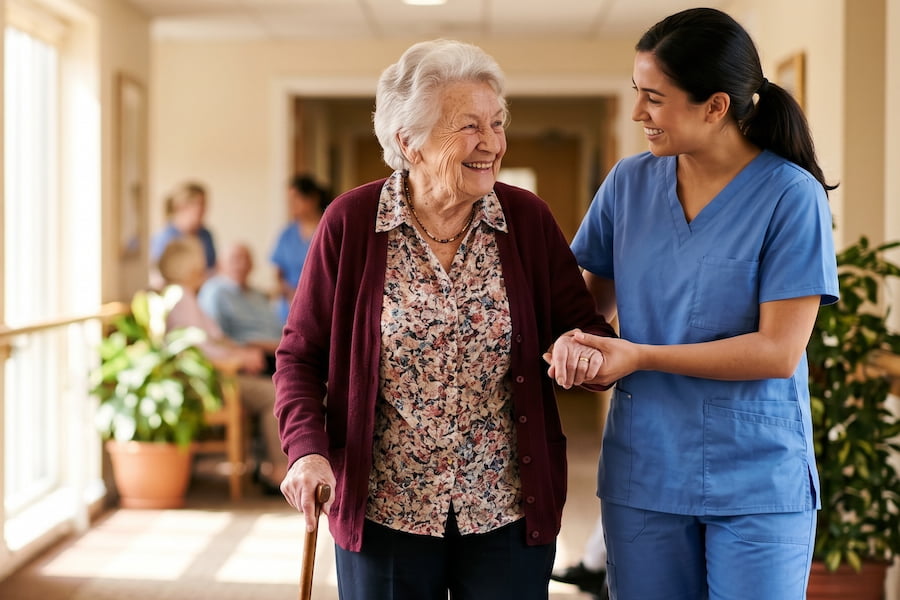
Kindness Is Not Just The Foundation Of Our Civilization, But It Actually Enhances Our Genes
Jul 17, 2026 - Alan Brough
Full Article
Kindness Is Not Just The Foundation Of Our Civilization, But It Actually Enhances Our Genes
Kindness and empathy, especially for strangers, is seen as an indicator of the evolution of our humanity, and as such it reflects the stature of our society, and, in the broader sense, our ‘civilization.’
And this goes back a long way. Research suggests that kindness provided the origins of socialization among early humans and it enabled the cooperation necessary for language, tools, and societal structures to emerge, which are all foundational for any group of people to be able to merge into a functioning and successful ‘civilization.’
In fact the word ‘civilization’ itself implies this, by the need to be ‘civil.’
Kindness is now widely considered a fundamental measure of the standard, quality, durability and sustainability of a civilization, so when we consider the quality and sustainability of our current ‘civilization’ we should consider how kind we are both as individual members of our civilization, and how kind our civilization is as a whole.
In fact many who study this topic describe ‘civilization’ as a slow process of learning to be kind, with kindness acting as the “lubricant” or “oil” that allows people to live together more easily and more productively.
Yet, our ‘civilization’ seems to be permanently embroiled in warfare, conflict over resources, exploitation and the domination of those who are weaker (both from within our own society and those from other competitive societies). This doesn’t seem to be a good reflection on us being ‘the Good Guys.’
Ultimately, the standard of a civilization is reflected in how it treats its weakest members and its capacity for empathy and generosity. Again, we just need to consider for a moment the implications of how MAiD in Canada is being deployed to ‘solve’ the problem of terminally ill people suffering from physical, mental or emotional issues. Just how different is this to how Hitler ‘solved’ the problem of disabled people in ‘the Great Arian’ society of the late 1930’s, and what does this say about our current Canadian ‘civilization’?
And the awful thing is that MAiD is just one example of many. Other questions we need to ask ourselves include:
- How were our elderly treated in their fear, bewilderment and isolation during 2020 and 2021 and was there any kindness in that?
- How were school kids treated if their parents refused to get them vaccinated during the Covid craziness? Was there any empathy there at all?
- How were healthcare practitioners (yes, many of you as Canada Health Alliance members reading this now) treated by their colleagues and their colleges when they questioned the narrative? We know there was no respect or kindness there either.
So just how civilized are we, and having lived through the last six years, can we now still be kind to others?
Whether we personally can or not, depends on our personal circumstances and no one can be a fair judge of those bitter experiences and how they have impacted us. But if we can rekindle and re-cultivate our ability to be kind and empathetic, it will not only break the cycle of physical and emotional violence, but it will actually enhance our genes and improve our health!
Kindness is part of ‘normal’ human nature and as we feel compassion for others’ suffering and help and support them, we are able, in some small way, to free them from their suffering. Research shows that when we show kindness our brain’s “empathy circuit” lights up.
According to decades of neuroscience research, we know that kindness goes beyond the desire to free people from suffering and includes an intention to improve others’ well-being without expecting anything in return. Yet, when you give, something is inadvertently gained that engenders beauty in your own inner world.
Naturally, kindness cultivates happiness. In a 2019 study published in The Journal of Social Psychology, researchers found that people who performed kind acts every day for seven days experienced a significant increase in happiness. Interestingly, whether people were kind to their family or to strangers, the more kind deeds they did or observed, the happier they were.
In the article “How Kindness Can Enhance Your Life” that was recently published in the Epoch Times, Makai Elías Calles writes: “Kindness affects more than emotions—it influences one’s DNA—shaping how the immune system works.
A group of scientists from the University of California set out to discover whether being kind to others changes our bodies at the genetic level and their finds are astonishing.
At the beginning and end of the study, the participants gave blood samples. The scientists looked for changes in a set of genes linked to inflammation and stress. Genes that, when overactive, are associated with a higher risk for diseases such as heart problems.
The findings were fascinating. The group that performed kind acts for other people showed the greatest healthy change in their gene activity in immune cells. The blood samples showed reduced expression of genes tied to inflammation and stress.”
And the data suggest that single acts of kindness may spread farther than we think.
Research conducted at the Wharton School of the University of Pennsylvania corroborates the contagious element of kindness in what they call “upstream reciprocity.” In controlled experiments, participants who witnessed someone helping another person were 26% more likely to help a random stranger later.
In a corroborative study, social scientists James Fowler and Nicholas Christakis found that when one person acts generously, it inspires others to act generously toward a wide range of different people, creating a chain of kind acts.
When one person acts selflessly, they found, it inspires their friends and even their friends’ friends to be more generous as well. The ripple continues up to a third layer, moving like a wave through human networks.
And that is the ripple of positive that not just heals us personally, but which binds us into a stronger, better civilization, where we are respected, supported and cared for, which is what everyone wants and needs.
I recently received a newsletter from my friends at the Thrive All Community. Their opening comment was exceptionally profound and very pertinent to this issue, and how, by raising our collective frequency, we will be able to, quite literally, ‘save the world.’ I would like to share this commentary with you (with full credit and thanks to Didi and her incredible team of visionaries). They wrote:
“There comes a time in every generation when we must decide what kind of world we want to leave behind. I believe that time is now.
We live in a world filled with war, greed, corruption, and division. Everywhere we look, people are taught to compete, to fight for more, protect what is theirs, because they believe there isn’t enough for everyone. But what if we’ve been asking the wrong question? What if the future of humanity isn’t built through competition, but through cooperation?
Look at nature. A forest grows because every tree, plant, bird, and insect plays its part. The human body survives because trillions of cells work together. When cells stop cooperating and only serve themselves, the body becomes sick. Perhaps humanity is suffering from the same illness.
Imagine a still pond. One small stone sends ripples across the water until every shore is touched. This is how cooperation spreads. Every act of kindness creates a ripple. It begins with one person, touches a family, strengthens a community, and soon spreads from town to town, city to city, province to province, until it reaches the world.
Imagine the impacts of this? An Earth where people work together instead of against one another. Where children grow up feeling safe, valued, and hopeful. Where leaders seek solutions instead of division, and communities care for one another.
It may seem like a dream. But every great change in history began when ordinary people chose a different way. Every ripple starts with one simple choice and when we send another ripple into the world because enough of us choose to create those ripples…One day they become a wave powerful enough to change the world.
The future isn’t something we wait for. It’s something we create. One ripple at a time.”
And I would add to this, one act of kindness at a time.
And the science proves that if you make the effort, be it as simple as a smile, a helping hand, an encouraging comment or a supportive hug, then everyone gets better.
Let’s give it a try…
Sources for this article include:
How Kindness Can Enhance Your Life – and Your Genes by Makai Elías Calles as published in the Epoch Focus section of the Epoch Times on July 13, 2026.
The Thrive All Community newsletter of July 13, 2026
https://www.sciencedirect.com/science/article/abs/pii/S0889159122003336?via%3Dihub