CHA Library
Since 2022 we’ve been building our library with articles, white-papers, educational documents, and opinion-pieces to preserve information and knowledge.
Natural Options For Managing Hypertension
Apr 11, 2026 - Alan Brough
Full Article
Natural Options For Managing Hypertension
In last week’s edition of the Canada Health Alliance newsletter we ran an article by Dr. Joanny Liu that explained how Chinese Medicine views hypertension. The core difference is that traditional Chinese medicine considers the totality of the patient to determine the root-cause of the person’s condition instead of simply trying to manage the symptoms.
The ‘treatment’ used by these two modalities are also very different. Chinese medicine tends to use a lot of herbs and more natural compounds, whereas the modern allopathic approach tends to rely more on pharmaceutical drugs, which can sometimes cause undesirable side effects.
I say this because I have had first hand experience of some of these side effects. However, as I have consistently high blood pressure (no doubt due to my habit of always taking on more than I should!) I have a very personal interest in trying to bring my blood pressure down a bit, ideally without the chemicals. And I am not alone in this: Current estimates are that 1.14 billion people around the world have high blood pressure, and that number is growing all the time…
Over the last fifteen years, blood pressure diagnoses have exploded as healthcare guidelines repeatedly lower thresholds, increasing the market for a life-time of drug dependency. As a result, now half of all American adults are officially considered to be “hypertensive” despite minimal evidence justifying this. As a result, millions of them are likely being prescribed drugs that are not entirely necessary without regard for the potentially negative side effects.
According to the Midwestern Doctor, in a substack post on the problems of blood pressure medication that was published in November 2024: “One of the biggest problems with [Western] medicine is that it’s been transformed from an artful doctor patient relationship to a disconnected interaction where the doctor carries out clinical algorithms. The current guidelines we use to treat everyone’s blood pressure are flawed, and need to be replaced with approaches individualized to each patient’s circumstances (for example a chronically stressed adult in their 20s with a blood pressure consistently above 160 needs to address their blood pressure, whereas a 160 blood pressure in an older adult is often not an issue).
Likewise, the ways we lower blood pressure are far too standardized to meet the needs of each individual patient. Treating the natural causes of high blood pressure (e.g., chronic anxiety, a sedentary lifestyle, or missing micronutrients) should come before medications. Similarly, if used, the blood pressure medication should be selected on the basis of it best fitting the individual patient’s situation at the lowest dose that works rather than numerous medications being indiscriminately piled onto the patient until their target blood pressure is reached.”
So we are now in a situation where:
- Despite aggressively trying to treat it, Western medicine still does not know what causes high blood pressure. As a result, it overlooks that impaired circulation elevates blood pressure and attributes the ensuing damage to “high” blood pressure rather than to insufficient blood flow to the tissues.
- Excessively low BP from over-treatment is dangerous, increasing risks of fainting, falls (especially in the elderly), kidney injury, cognitive decline, ischemic strokes, and mortality.
- Different blood pressure medicines have very different risks and benefits. Because doctors are unaware of this, they frequently push patients to take inappropriate medications and then deny that life-impairing side effects are happening.
So the question is, what can we do about it?
Firstly, let’s be clear that hypertension is a serious issue and should not be ignored, and pharmaceutical drugs can be helpful (if not critical) in certain cases. However, it is always worth getting a second opinion, and as Dr. Liu explains, speaking to a practitioner of Chinese Medicine could be very beneficial, especially if you want to explore more natural alternatives that include things like weight loss, exercise, reduction of sodium intake, abstinence from alcohol, etc. And of course there are a lot of foods that can help bring down blood pressure with the ‘DASH Diet’ and supplemental magnesium being recommended by many practitioners.
According to literally hundreds of research papers on the subject, the four most effective foods that help lower blood pressure are:
- Beetroot Juice: which has been shown to help lower blood pressure due to its high nitrate content. Nitrates are converted into nitric oxide in the body, which relaxes and widens blood vessels, improving blood flow and reducing pressure. Studies have found that regular consumption of beetroot juice can significantly lower both systolic and diastolic blood pressure.
- Chocolate: Considering that we have just been through the chocolate-gorging days of Easter, you will be pleased to know that dark chocolate is particularly effective at lowering blood pressure. However, it must be good quality dark chocolate, of at least 70% purity. An Australian meta-analysis of 13 randomized studies concluded that dark chocolate is more effective than a placebo in lowering blood pressure. Among hypertensive or pre-hypertensive patients, eating chocolate dropped systolic pressure as much as 8.0 mmHg and diastolic pressure as much as 4.9 mmHg.
- Olive Oil: Data from 6,863 participants, with at least two years of follow-up, showed that among men, hypertension was up to 75 percent lower for those eating more olive oil compared to those eating the least.
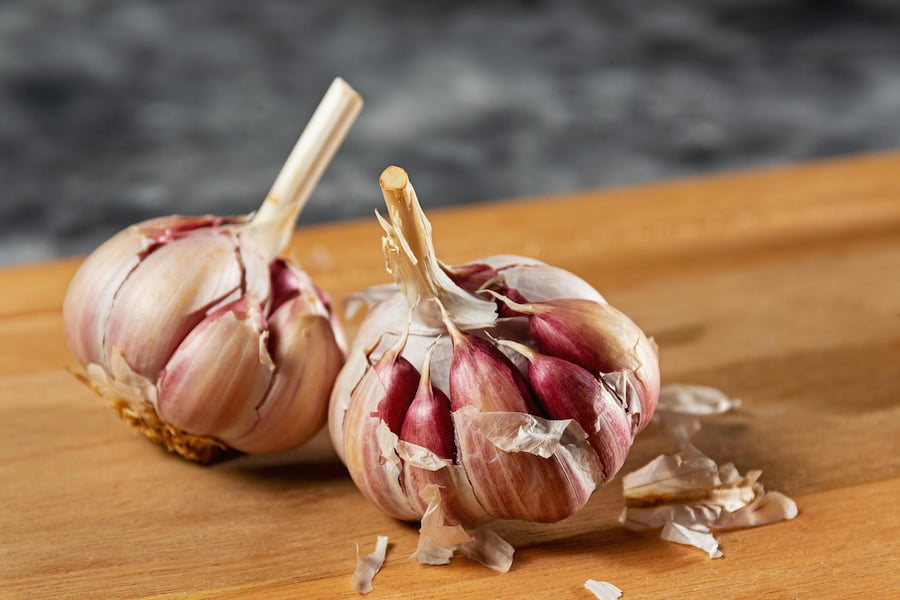
- Garlic: In fact, garlic actually rivals blood pressure medications. In a study of 210 hypertensive patients, garlic tablets significantly reduced blood pressure compared to the drug Atenolol. And unlike drugs, garlic is safe and well-tolerated.
In addition to these, there are many other foods that help reduce blood pressure. Back in 2023 GreenMedInfo listed the top nineteen foods that are proven to naturally lower blood pressure. They are:
- Chocolate
- Beets
- Olive Oil
- Garlic
- Watermelon
- Pomegranate Juice
- Chokeberry Juice
- Pistachio Nuts
- Coconut Water
- Flaxseeds
- Whole Grains
- Sesame Oil
- Hibiscus Tea
- Gazpacho Soup
- Kiwi Fruit
- Blueberries
- Concord Grapes
- Cinnamon
- Cardamon
While we are not saying that eating the above foods could completely solve your hypertension issues, it is worth remembering that quote from Hippocrates who famously said, “Let food be thy medicine, and medicine be thy food.” Hence, these foods are definitely worth a try, and considering how many there are, you are bound to find some of these that you like and which are easy to incorporate into your regular diet. They are definitely worth considering, especially if you are wanting to avoid getting onto (or are wanting to get off) the pharmaceutical bandwagon.
As with all things though, it is often about balance, moderation, common sense, and not simply taking the easy route of “popping the pill and everything will be fine.” Sadly, it hardly ever really works that way.
The Midwestern Doctor concludes, “While vast societal forces are pushing us to a depersonalized model of algorithmic medicine that cannot create health, the widespread loss of trust in our medical authorities (due to the Covid-19 response) is now creating a push in the opposite direction. In turn, it is my hope and belief that many things the medical orthodoxy has habituated us to, such as needing an ever lower blood pressure, can now be critically re-examined and that we are now in an era where it may be possible to actually make America healthy again.”
See https://greenmedinfo.com/blog/19-foods-proven-lower-blood-pressure for the full article and the reasons why each of the above foods can help reduce your blood pressure naturally.
Sources for this article include:
https://www.midwesterndoctor.com/p/understanding-blood-pressure-in-a
https://www.thefocalpoints.com/p/why-take-blood-pressure-medications
https://www.midwesterndoctor.com/p/the-great-dangers-of-blood-pressure
https://greenmedinfo.com/blog/eating-chocolate-could-slash-high-blood-pressure-risk
https://www.stopcardiovasculardisease.com
https://www.thefocalpoints.com/p/blood-pressure-reduction-with-beet
https://greenmedinfo.com/blog/19-foods-proven-lower-blood-pressure